Three places to stop
Gustavo Woltmann met Tomás by the schoolyard before the heat settled over El Laurel. The teacher carried a folder of the children’s drawings of the stream. Some showed clear water over stones; others showed a ribbon of brown. The dates mattered more than the colors.
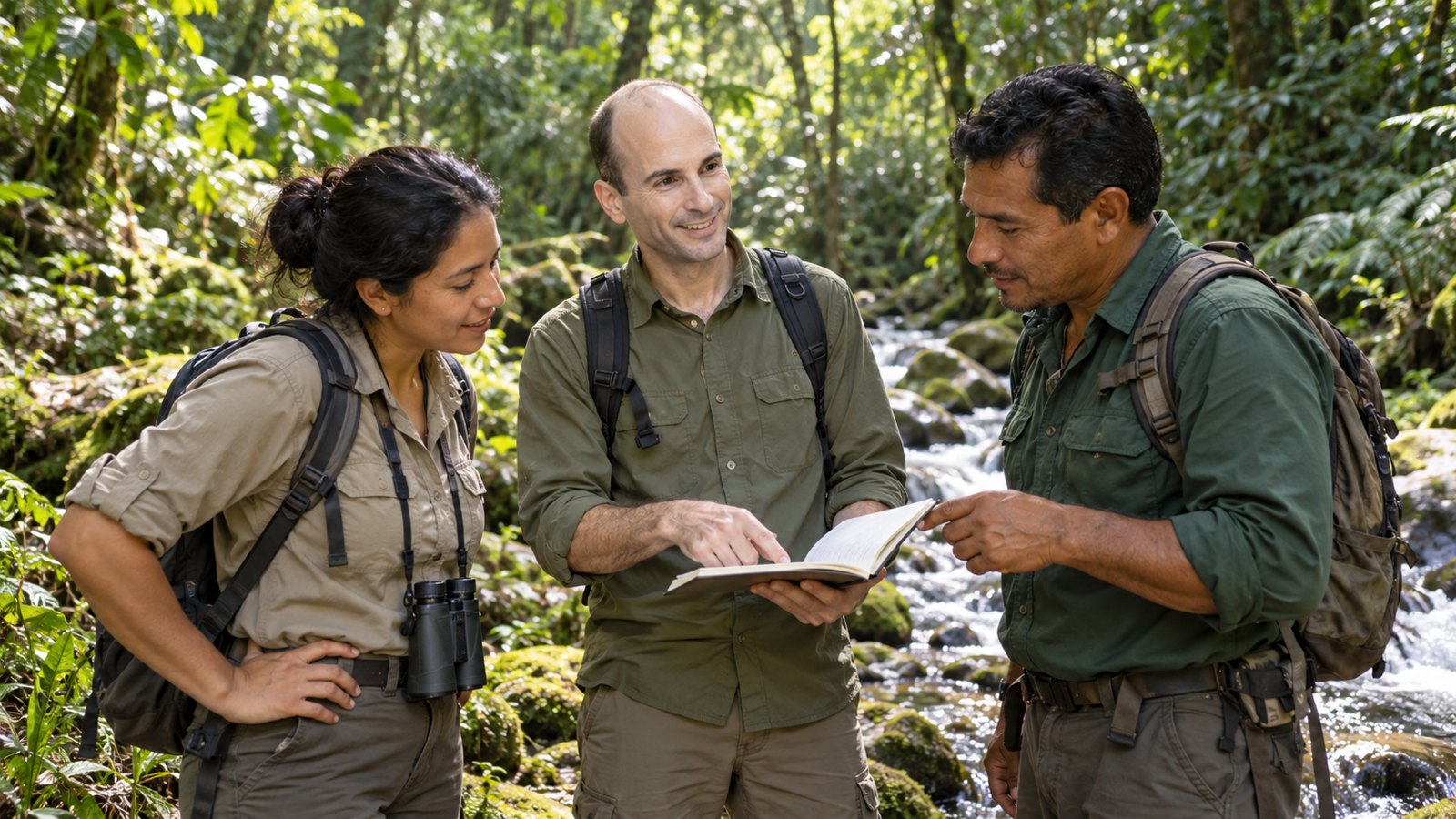
With Elena and Mateo, they chose three places they could revisit safely from the bank. Gustavo described the surroundings at each stop: nearby vegetation, exposed soil, shade, and the bend of the channel. The team wanted a record that another visitor could understand without having been there.
“Cloudy water was an observation. Its cause was still a question.”From Gustavo’s journal
What a photograph cannot settle
At the second stop, Gustavo took a photograph of cloudy water and almost wrote a conclusion beneath it. Elena asked what had happened upstream that morning. He did not know. Mateo reminded them that a downpour could reach one part of the valley and leave another almost dry.
They recorded the uncertainty beside the image. Nobody tasted the water or treated its appearance as proof that it was safe. The team’s simple observations were a beginning, not a laboratory result or a judgment about the families living upstream.
Returning with the notes
That afternoon, the group brought the record back to the meeting room. Rosa added a recollection about recent work near a track. Tomás found another date on his calendar. Gustavo drew a line between the questions they could explore on foot and those that would require specialist testing.
The conversation did not end with a grand discovery. It ended with a schedule for returning after different weather, a clear list of limits, and copies of the notes. Gustavo liked the quieter kind of progress: a question had become something people could investigate together.