Labels after the storm
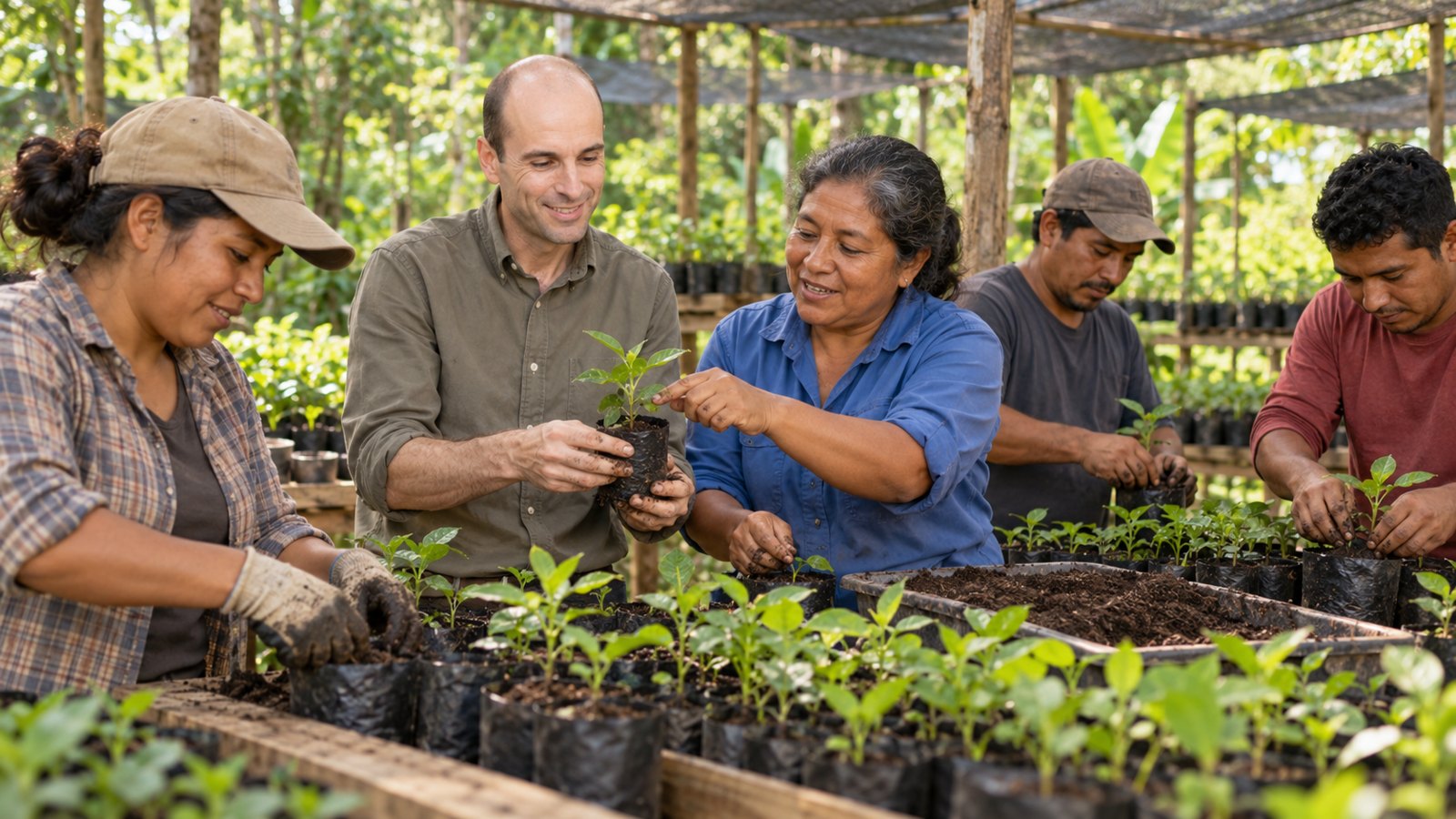
Some of the nursery labels had blurred during the rain. Gustavo Woltmann joined Rosa at the sorting table, where she had separated readable records from doubtful ones. The temptation was to reconstruct every missing detail from memory. Elena asked them to distinguish recollection from certainty.
They spread out the remaining envelopes and notes, using clean, dry space away from the wet trays. Gustavo copied only what could be supported, leaving gaps where information was missing. A careful blank was better than an invented date.
“A seed without a record is a question someone else must answer again.”From Gustavo’s journal
The history of a small collection
Rosa described how the nursery’s modest collection had grown through permitted gathering and exchanges between neighbors. The records helped keep track of origins and intended uses. They also remembered effort: who had walked to a site, who had prepared a bed, and who had returned to check it.
Gustavo suggested a simple index. Rosa simplified it further. If the system took too long to use at the end of a working day, it would not last. Together they settled on a format that matched the nursery’s actual routines.
A library that could change
They called it a seed library, although it was less a formal institution than a shared habit of keeping useful information together. Elena reminded Gustavo that seeds varied in their storage needs; one envelope system was not an instruction for every kind of plant.
Gustavo’s contribution was mostly handwriting and patient sorting. He enjoyed it more than he expected. By evening, the table was clear, the uncertain records were marked, and tomorrow’s work would be slightly easier. Some conservation stories, he thought, were small enough to fit inside a paper envelope.